For dry, high-altitude homes, the best exterior paint system is thorough prep, a quality bonding primer on bare or chalky areas, and two coats of 100% acrylic exterior paint with good UV resistance. Lighter colors fade and heat up less than dark ones.
Why paint fails faster here
At higher elevation, UV exposure is stronger, and low humidity dries siding and trim. Paint chalks, fades and cracks sooner on south and west walls.
Big daily temperature swings make wood expand and contract, stressing the film.
Prep makes the difference
Wash off chalk and dust, scrape loose paint, sand edges, replace rotted wood and caulk gaps.
Spot-prime bare wood and repairs before the finish coats.
Choosing the right products
100% acrylic exterior paints stay flexible and resist UV. Satin finishes balance durability with a forgiving look.
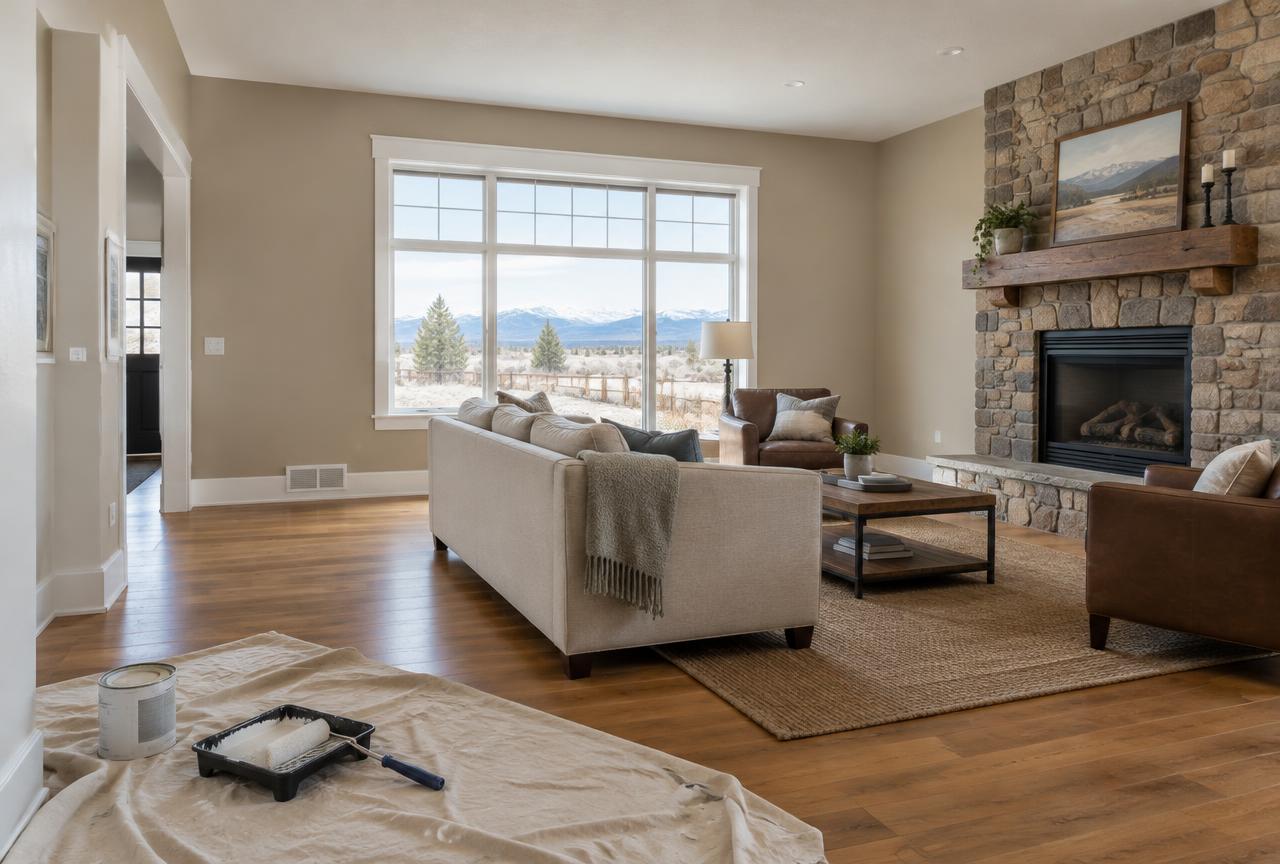
Inside, scrubbable eggshell or satin works well for living areas, and semi-gloss for trim and doors.
Timing your project
Paint when temperatures are within the label range and avoid applying in direct afternoon sun on hot days.
A1M Construction plans the schedule around the weather and gives you a written estimate first.
Frequently asked questions
How often should I repaint my exterior?
Many homes need it every 7 to 10 years; sun-facing walls may need touch-ups sooner.
Do you do interior painting too?
Yes. We paint walls, ceilings, trim and doors.